



U.S. Marshals Service Commemorates 237 Years in September
For immediate release
Office of Public Affairs
Usms.mediadesk@usdoj.gov
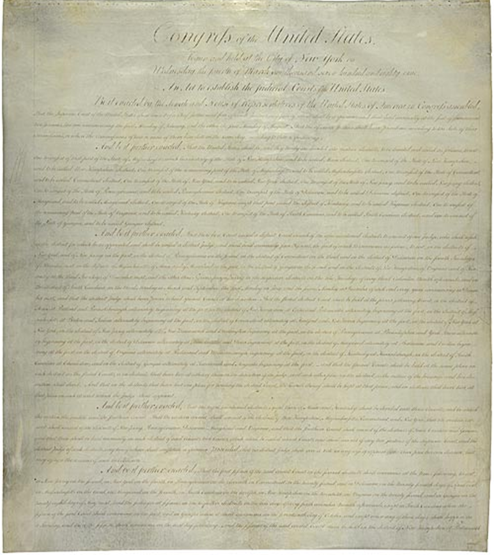
The first page of the Judiciary Act
When President George Washington signed the Judiciary Act on Sept. 24, 1789, he established the Office of United States Marshal. Two days later he signed the commissions of the first 13 U.S. Marshals, many of whom he knew personally from their military service during the war, but all of whom he considered well-respected and active in the affairs of their local communities and states.
The first U.S. Marshals served as the primary enforcement arm for the new federal courts and were tasked with carrying out all lawful orders, warrants, and instructions issued by federal judges, Congress, or the president. They executed judges’ orders, delivered federal court summonses, subpoenas, and writs within their assigned judicial districts. They protected the federal judiciary, secured courtrooms, and held prisoners awaiting trial.
During the 1790s Congress passed laws that required marshals to perform duties outside their judicial sphere. One of them was titled “An Act providing for the enumeration of the Inhabitants of the United States,” passed on March 1, 1790, and making the marshals responsible for coordinating the count. Every 10 years until 1870, U.S. Marshals conducted the national census.
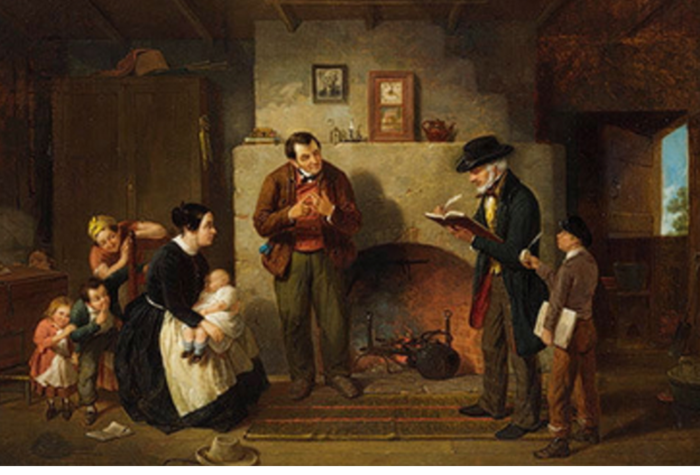
Frances William Edmonds 1854 painting "Taking the Census" depicts a marshal and his young assistant collecting data for the 1850 Census. It was the first census in which marshals recorded the name of the head of each family as well as the name of every person living within the household.
Marshals were the logical choice because of their positions across the country, according to the agency’s first historian Frederick S. Calhoun, in his book The Lawmen, United States Marshals and Their Deputies, 1789-1989. Each marshal divided his district into specific sections and hired assistant marshals to take the count within each division. The assistant marshals traveled from house to house, town to town, counting all the inhabitants of each household except Indians, who paid no taxes. In their returns the assistants distinguished between free persons and slaves, males and females, whites and blacks, those under 16 and those 16 or older. Some marshals added information on the occupation of the head of the household, but that was not requested by Congress, Calhoun notes.
For this tedious work, according to Calhoun, each assistant received a small fee based on a sliding scale according to the population density in his section. The rate was $1 for every 150 people in rural areas and $1 for every 300 people in cities or towns with more than 5,000 people.
During the 19th century, U.S. Marshals evolved from local census-takers and court bailiffs into iconic frontier lawmen who maintained order during westward expansion, the Civil War, and the industrial strikes of the late 1800s.
For an 11-year period before the Civil War, U.S. Marshals were legally required to enforce the Fugitive Slave Act of 1850. U.S. Marshals and their deputies were legally required to track, capture and return escaped slaves to their owners. Enforcing the Fugitive Slave Law put the Marshals squarely in the middle of controversy, but the Marshals, regardless of their personal feelings, had no choice. The Constitution itself required the free states to return fugitive slaves. The Fugitive Slave Law merely implemented that Constitutional provision. To deny the law, even a hated law, meant a denial of the Constitution itself. The Marshals enforced the law.
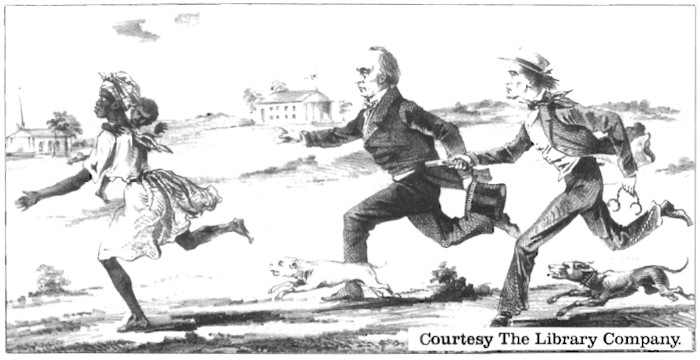
Any Marshal or deputy who refused to accept or failed to execute a warrant for the arrest of a suspected freedom seeker faced a $1,000 fine (roughly equivalent to $40,000 today).
Abolitionists and other opponents of slavery and the Fugitive Slave Law willfully and as a matter of conscience violated the law by rescuing fugitive slaves from the custody of U.S. Marshals and taking them to Canada via the Underground Railroad.
Northern hatred of slavery and Southern protection of it resulted in Southern secession from the Union, national Civil War, and the dismantling of the “peculiar institution,” a Southern euphemism for slavery, as the South’s economy relied solely on plantation agriculture.
During the country’s Civil War, U.S. Marshals rooted out Confederate spies and seized enemy assets. Northern and eastern marshals enforced neutrality laws to stop armed expeditions and smuggling rings from crossing into Canada or foreign territories.
Immediately following the conflict, southern Marshals transitioned into maintaining basic social order and supporting federal authority during the early, turbulent years of Reconstruction.
Bass Reeves
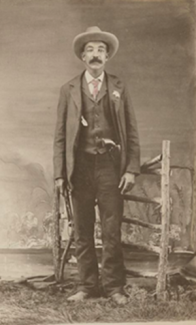
In 1875, Bass Reeves was assigned the position of Deputy U.S. Marshal, one of the first African Americans to serve in this capacity. He served for 32 years, until 1907, in dangerous Indian Territory. Reeves’ bravery allowed him to bring justice to some of the most ruthless outlaws in the West. Through his service, he not only made the American West a safer place but created opportunities for more people of color to serve our country.
Frederick Douglass
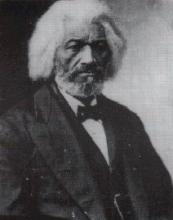
An American social reformer, abolitionist, orator, writer, and statesman, known as “the most important leader of the movement for African American civil rights in the 19th century," Frederick Douglass is also the first African American U.S. Marshal.
After Republican Rutherford B. Hayes was elected president in November 1876, he appointed Douglass as U.S. Marshal for the District of Columbia, making him the first person of color to be so named. The U.S. Senate voted to confirm him on March 17, 1877.
Douglass accepted the appointment, which helped assure his family's financial security. During his tenure, Douglass was urged by his supporters to resign from his commission, because he was never asked to introduce visiting foreign dignitaries to the President, which was one of the usual duties of the post. However, Douglass believed that no covert racism was implied by the omission and stated that he was always warmly welcomed in presidential circles. The Douglass family's final home in Washington, D.C., is preserved as the Frederick Douglass National Historic Site.
Besides being the first Black U.S. Marshal, Douglass is the most photographed American of the 19th century.
Phoebe Couzins
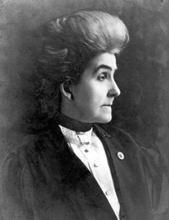
In 1887, a new trailblazer came onto the scene. When John Couzins died in September of that year, President Grover Cleveland appointed his daughter Phoebe as interim U.S. Marshal for the Eastern District of Missouri. Already the first woman to graduate Washington University's law school in 1871, she passed the bar and practiced law for two months before devoting herself to women’s suffrage. She was buried in 1913 wearing her Marshal's badge, and her grave sat unmarked until 1950. Marshal Phoebe Couzins accomplished what no other woman had done before and created the initial opportunities for operational female employees with the USMS for decades to come.
In the 1920s, Marshals were the principal federal law enforcement agents responsible for enforcing Prohibition laws until the Treasury Department created a dedicated Bureau of Prohibition in 1927.
World Wars
During World War I, U.S. Marshals handled massive domestic security operations, registering 480,000 German enemy aliens and issuing 200,000 travel or residence permits; investigating more than 222,000 selective service (draft) violations and arresting 6,300 enemy aliens under Presidential Arrest Warrants; guarding high-risk areas including shipping docks, ammunition plants, and military camps; and interviewing 2,300 enemy aliens held in military facilities.
In World War II, Marshals continued similar domestic tasks on an even larger scale, managing security clearances, handling federal prisoners, enforcing wartime presidential proclamations, and assisting military and intelligence agencies with internal security threats.
During the height of the Civil Rights Movement, a century after they were charged with enforcing the Fugitive Slave Act, the U.S. Marshals were sent South to protect black citizens in the exercise of their civil rights under the 14th and 15th Amendments to the Constitution.
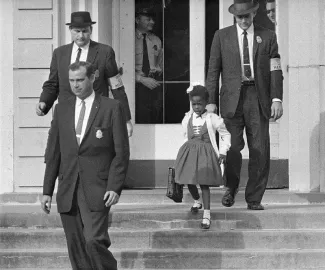
Deputy U.S. Marshals escorted first-grader Ruby Bridges, the first Black student to integrate William Frantz Elementary School in New Orleans on Nov. 14, 1960.
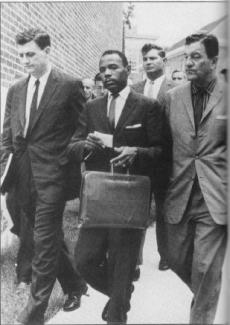
In September 1962, President Kennedy ordered 127 Marshals to accompany James Meredith, an African American who wanted to register at the segregated University of Mississippi. Their presence on campus provoked riots, but the Marshals stood their ground, and Meredith was registered.
Throughout the South, Marshals escorted Black children to school and protected Black college students who simply wanted to get an education. The Marshals also walked with Blacks from Selma to Montgomery to register to vote, they stood beside Deputy Attorney General Nicholas Katzenbach when he confronted Governor George Wallace on the steps of the University of Alabama, and they rode buses with the Freedom Riders.
In doing so, the Marshals were upholding the Constitutional rights of all citizens to enjoy equal access to society's benefits, regardless of race.
The USMS continued its protective mission in 1971, as Witness Security was established as a divisional program within the Marshals Service. WITSEC has successfully protected approximately 19,300 participants – including innocent victim-witnesses and cooperating defendants and their dependent family members – whose lives are in danger because of their cooperation with the U.S. government. WITSEC is a vital and effective tool in the government’s battle against organized crime, drug trafficking, terrorism and other major criminal enterprises.
Fugitive Apprehension
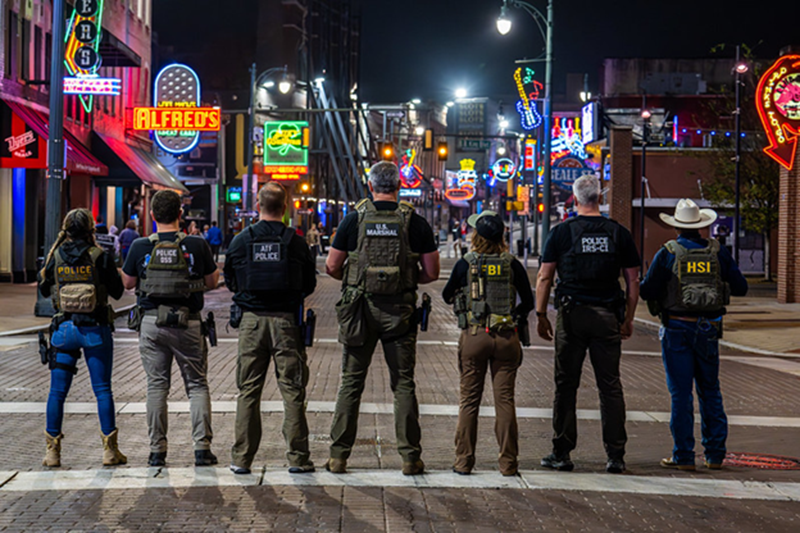
The USMS continues to protect American citizens by leading eight regional and nearly 60 local fugitive task forces to locate and arrest some of the most dangerous fugitives threatening American communities.
In 2005, Operation FALCON (Federal and Local Cops Organized Nationally) began, and through its implementation, Deputies and their law enforcement partners conducted national fugitive operations to apprehend felons. By its close in 2009, FALCON had completed 91,086 arrests and cleared 117,874 warrants.
Since 2009 the agency has continued to partner with federal, state, and local law enforcement to target violent crime, gang members, illegal firearms, and narcotics throughout the country with strategic operations like Triple Beam, Washout and North Star.
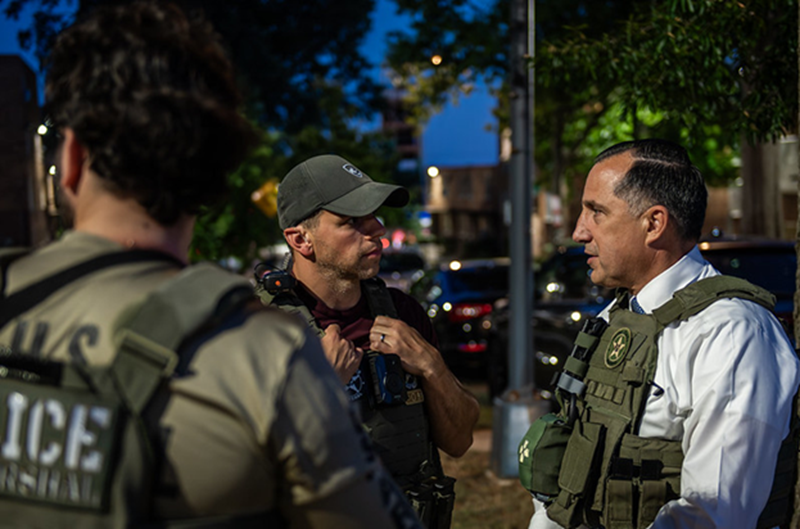
More recently, the USMS is leading the presidentially mandated law-and-order operations in both Washington, D.C., and Memphis, Tennessee. Under the leadership of Director Gadyaces S. Serralta, these sweeping federal-state coalitions combine massive neighborhood saturation with targeted warrant enforcement to crack down on violent crime.
Protecting Children
On July 27, 2006, Congress authorized the Adam Walsh Child Protection and Safety Act (AWA) which gave the USMS three principal responsibilities under the law: assisting state, local, tribal and territorial authorities in locating and apprehending non-compliant and fugitive sex offenders; investigating violations of the AWA for federal prosecution; and assisting in the identification and location of sex offenders relocated as a result of a major disaster. The AWA has allowed for the protection of the most vulnerable members of American society and granted them the justice they deserve.
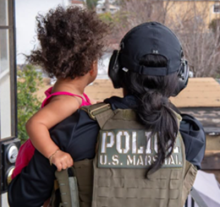
The U.S. Marshals Service continues to prioritize the safety of minors. Since 2015, when the Marshals received enhanced authority under the Justice for Victims of Trafficking Act, the agency has located or recovered nearly 5,000 missing children.
The USMS continues to uphold its original intended purpose of protecting the U.S. Federal Judiciary, but the agency’s role continues to expand.
More than two centuries later, 94 U.S. Marshals and nearly 3,900 Deputy U.S. Marshals, with the support of 1,600 administrative employees, are locating and arresting federal suspects, handling the administration of fugitive operations and managing criminal assets across states, territories and tribal lands, operating the U.S. Federal Witness Protection Program and the Justice Prisoner Air Transportation System (JPATS) and protecting senior government officials through the Office of Protective Operations.
Because of the U.S. Marshals Service, people in America and its territories and tribal lands have lived in a safer nation for the past 237 years.
For more information about the U.S. Marshals and its role in American history, please visit the agency’s Historical Reading Room.
Additional information about the U.S. Marshals Service can be found at https://www.usmarshals.gov.
####
America’s First Federal Law Enforcement Agency